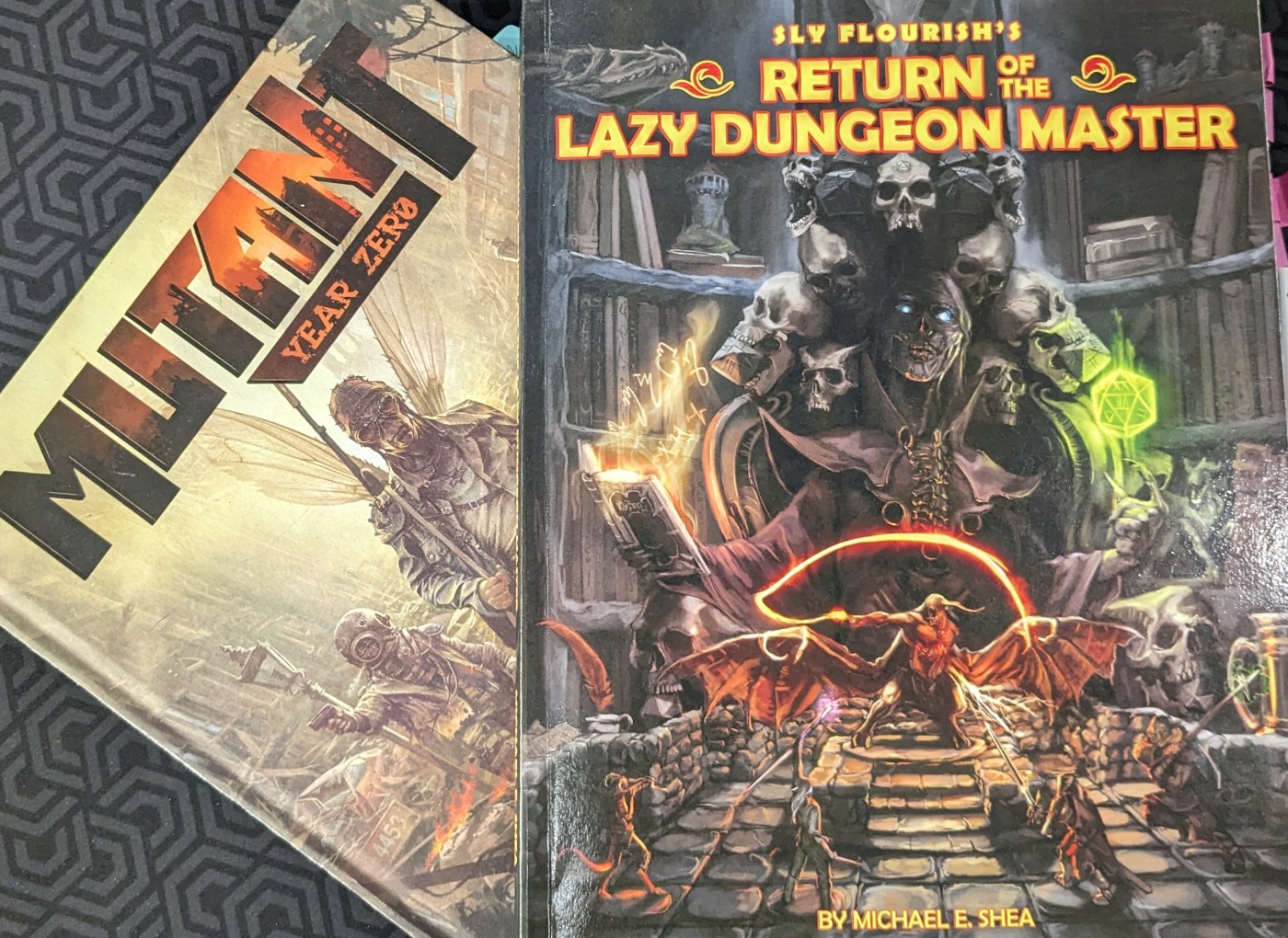
The other day I was listening to The Lazy RPG Podcast – D&D and RPG News and GM Prep from Sly Flourish’s, A talk show and prep show hosted by Mike Shea of the popular book, Sly Flourish’s Return of the Lazy Dungeon Master. A book that has eight steps that help a GM prepare for game nights. On one of his episodes, “A Digital 5e Utopia – Lazy RPG Talk Show”, a Patreon member of his ask the question about using dialogue options for an NPC. Mike’s response to it was that dialogue options were a form of step 4 from the book, Secrets and Clues. Short pieces of information that are relevant to what players would want to know or something they can discover throughout the game. Dialogue options are just tied to specific characters where Mike’s method of Secrets and clues does not rely on a character or location, they can be dropped whenever the game makes sense. I personally didn’t take much stock of this. I have read Sly Flourish’s Return of the Lazy Dungeon Master, which I have read several times and find it to be an excellent resource with a method that does not work for me. At least I didn’t think it did.
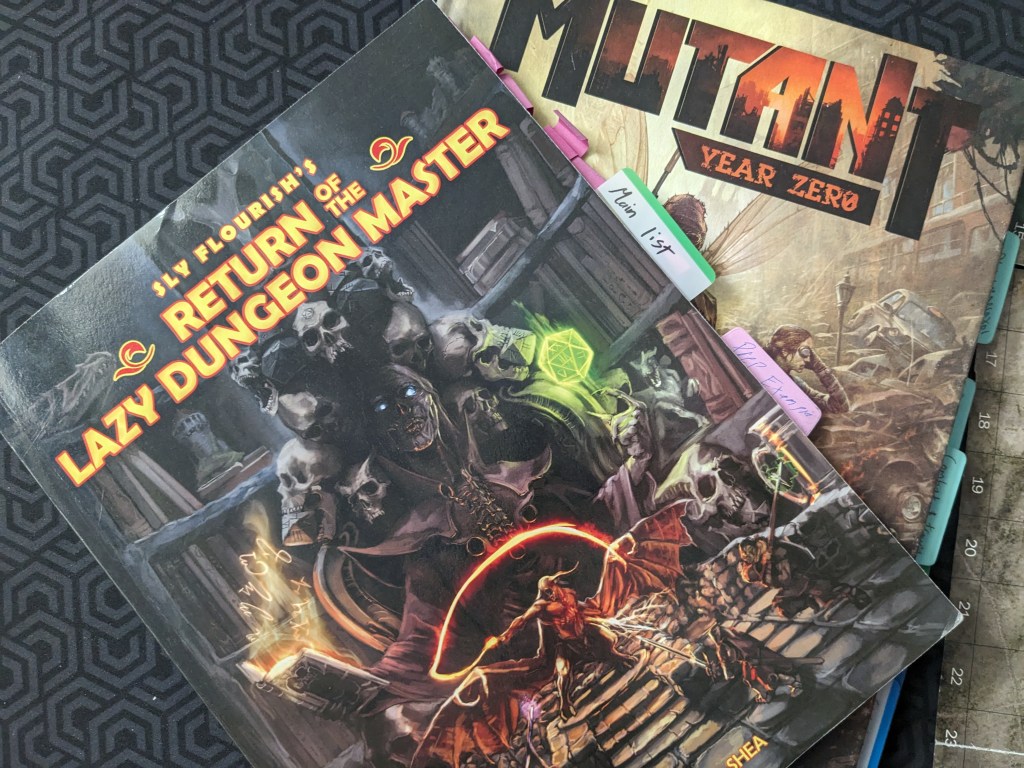
I found myself preparing for my weekly Friday night group where we play the post-apocalyptic game of Mutant Year Zero, published by Free League Publishing. As I was going through the setup, something clicked. I realize the game inadvertently had mechanics built into the game that go almost hand in hand with the steps of the Lazy GM. There’s a page that helps GMs prepare for session to session, I was surprised I just hadn’t noticed how much it is in line with the lazy steps and how much I’ve been using the method. I want to go over the steps and just do a quick dissection of how Mutant Year Zero does this. If you don’t have the book, you can look at The Lazy GM’s Resource Document, where Mike Shea has gratefully published the basics in creative common. Now before we start one of the big things to know about Mutant Year zero is that it has two different main areas of gameplay. The first is the ark, your home base and community that is trying to survive. The second is the zone, and unexplored wilderness that is explored on a grid. Both go hand in hand but have different gameplay style and moments of roleplaying.
The Eight Steps of Lazy RPG Prep
For a typical game session, the Lazy RPG Prep checklist looks like this:
- Review the characters
- Create a strong start
- Outline potential scenes
- Define secrets and clues
- Develop fantastic locations
- Outline important NPCs
- Choose relevant monsters
- Select magic item rewards
Here’s a brief summary of each of the steps.
https://slyflourish.com/lazy_gm_resource_document.html#eightsteps
With that out of the way, Let’s look at the first step, review the characters. This is looking at characters and what they want. This is easily the character’s Big Dream, a section filled out at character creation that tells what the character is working toward. In face it is also great for step 3 of outlining potential scenes, where the GM can help prep situations that lead to the big dream. Other parts of character sheet help a GM with other steps of the Lazy DM steps. Relations to NPCs help Step 6 with outlining important NPCS.
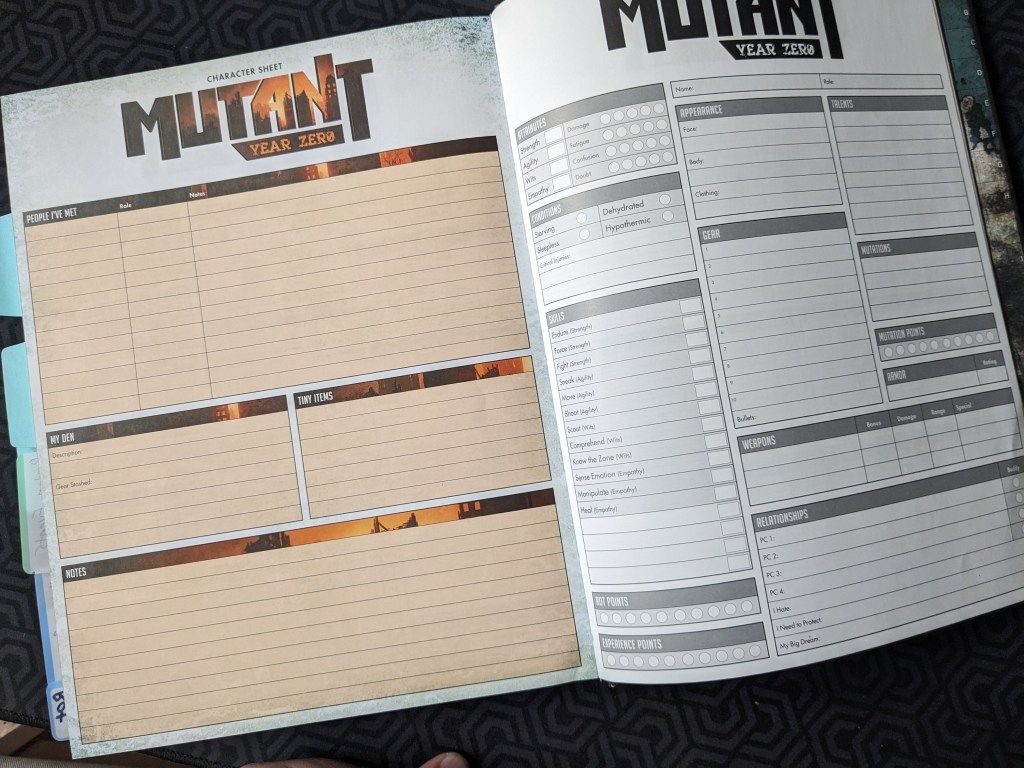
The second step creating a strong start, is one few step that are based on the story and what has happened previous sessions. Now when we get to step 3. Outline potential scenes, this is great when you are In the ark cause you roll or draw threat cards that show what new threat is happening at the ark. You can outline what scenes of things happening at the ark when the threat occurs. Which in turn leads to step 4. Secrets and clues, where you can prepare clues and secrets on how the ark can survive or where a resource will be needed for. Steps 5. Develop fantastic locations and step 6 outline important NPCS, are done when people are creating the ark with both creating what their ark look like, where the key factions are located, and as they work on the ark, they create more fantastic locations.
The Zone works very much like a hex crawl, as players crawl over the map exploring locations. This kind of style already works for the final four steps. The maps that come with the game already some interesting locations that you can take inspirations to develop fantastic. Then the book has a large number of tables that help a GM develop fantastic locations out in the wild. There’s a table that shows if certain terrain has threats, ruins or ancient cool artifacts of the old age in the area. There’s a table that works with steps 6. And step 7 where you roll to see if the threat in the zone is humanoid, or beast. Or the deadliest enemy to man, Nature. All the while the books says, “remember GM, this is just a guideline, you are the GM. Maybe these thick woods grew around an ancient store of the old age holding the strings of Wonderwall”
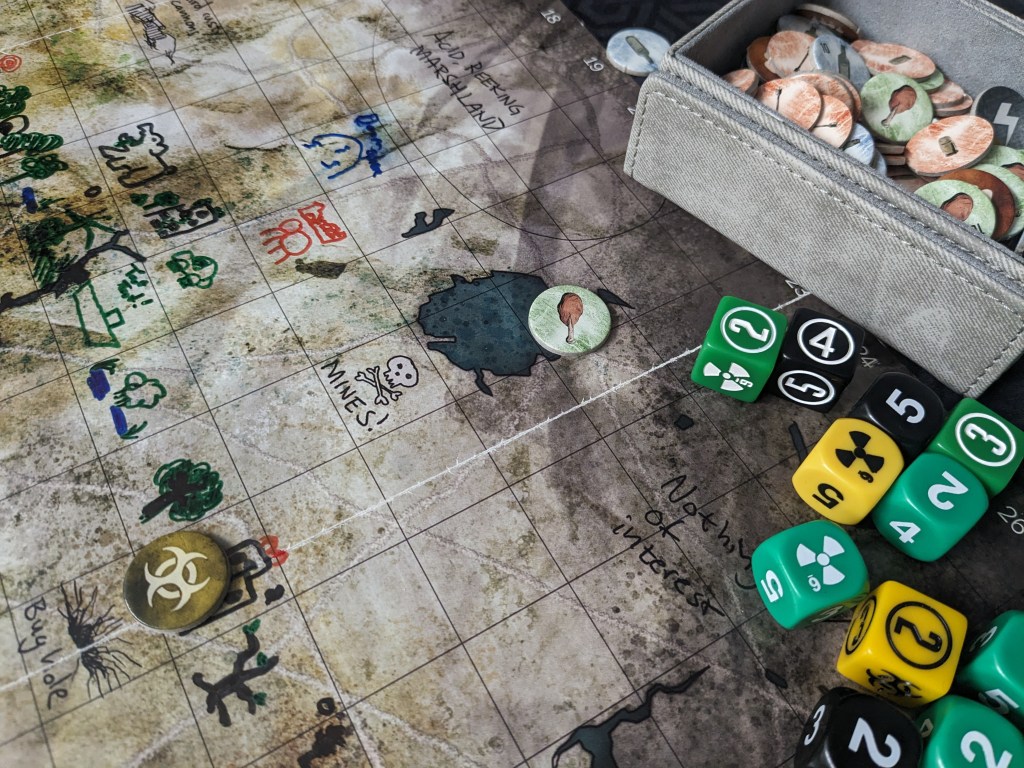
Now there are times when one set of steps is more important to a session than another. If the ark isn’t growing, you are going to have the same locations each time and not really running into monsters. Doesn’t mean there’s not a crazy cannibal clown running around the naval aircraft carrier that your players pick as the ark, it just means that things like that won’t be happening all the time. But that’s kind of the point. It’s supposed to be this community and home that is slowly growing and changing. More personal problems and roleplaying between ark members. The Lazy steps important to the ark and to zone exploration are different and the lazy DM steps are supposed to be modular. I think Mike Shea put it best when he wrote
“The eight step…are intended to be modular…You may have other steps you find vital to your prep not included here or find that some of these steps don’t serve you and are easily skipped. That’s perfect. That’s how the Lazy DM style is supposed to work.“
Mike Shea via https://slyflourish.com/eight_steps_2023.html
Originally, I had chicken scratches and kind of wild notes that I’ve always used, but realizing how much it fits into the 8 steps has me using the whole 8 steps a lot more and having more consistent and easier to read perpetration notes.
Now the point of this blog was more to look between these two pieces of work. It’s not sponsored and was for me to get my thoughts out, and in a way to say how easy it is to run Mutant Year Zero. Writing this made me come to the conclusion that I would recommend it for beginner GMs if they want to start with a more roleplay focus game. If interested in Mutant Year Zero you can pick up the corebook here or the starter booklet for free here. This blog post was also my way to say I’ve come around on the Lazy DM 8 steps and whole heartily recommend the book. The reference document is here, but if you want to buy the book you can get it here. Note: I do not get money from either of these links, nor was this blog post sponsor, I genuinely love these two books Thank you to everyone who worked on Mutant Year Zero and Thank you Mike from Sly Flourish for the 8 steps.
 A Stray Blog
Leave a comment